Press Release: Feminist March 2026
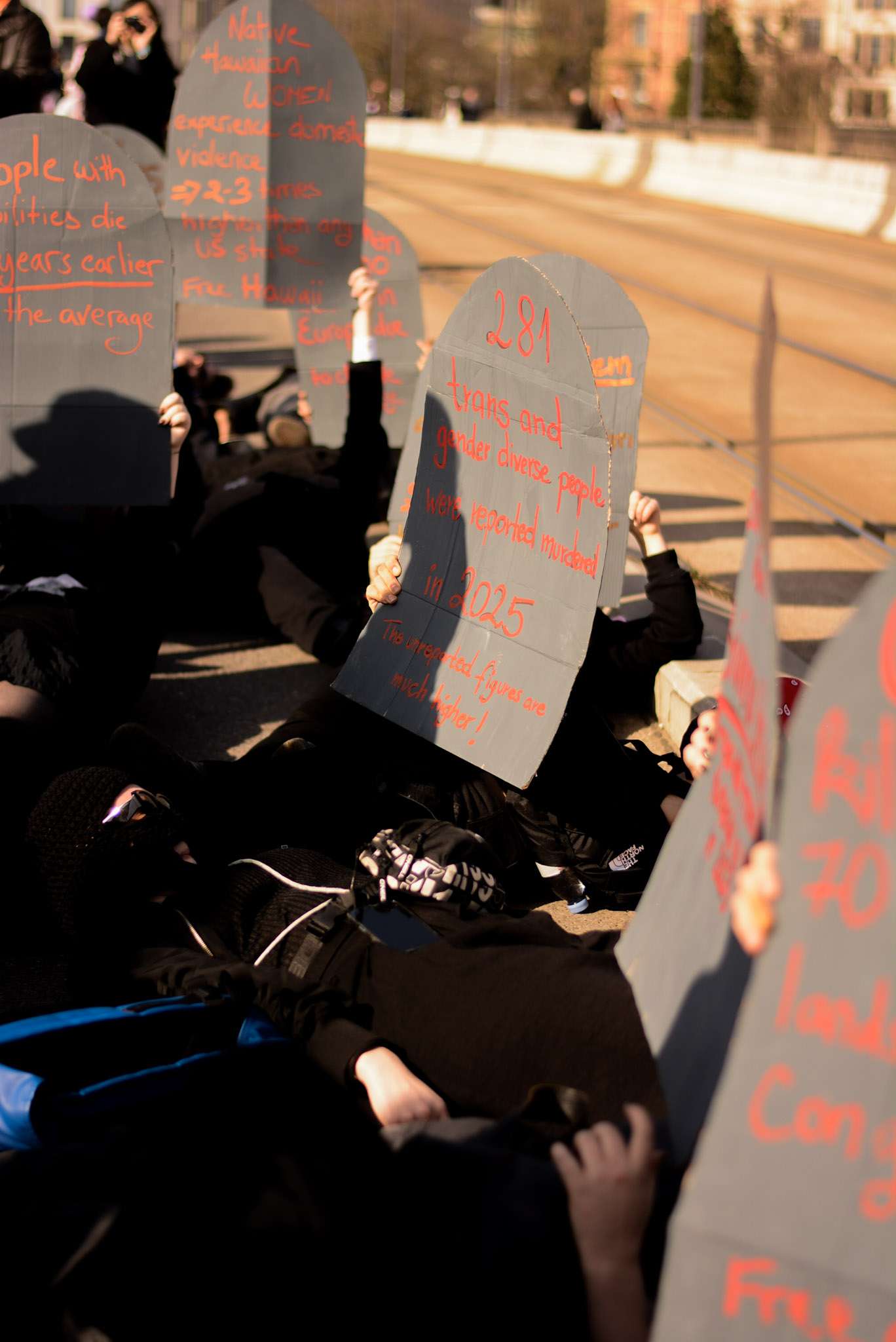
Megaphone knows that marginalized attendees of the feminist march needed to be given a voice. The unfortunate reality of organizing within JIF is that year after year, the same problem arises: as the optics of the march become a selling point for many political candidates, JIF compromises on the message in an attempt to become more digestible rather than truly and unapologetically intersectional feminist and politically daring.
JIF gets to decide the order in which groups march in and it seems to disregard its political responsibility as feminists in the imperial core to give a voice to the most marginalized of groups. As the Western hemisphere terrorizes oppressed communities with divisive white supremacist narratives, it is alarming to see organizers leaving racialised women at the very back of the march where their demands are easily ignored.
Our aim was to reach the front of the march, stage our die-in, leave a corridor to allow the march to keep going and play the speeches we gathered from Luxembourg-based and International feminists forgotten at the margins of a movement that failed to platform them. Our plan was never to prevent the march from continuing but simply to reach the people we wanted to see more action from. We were met with hostility from JIF, whose members ripped our banner from our hands and asked the police to get involved.
This reaction confirmed the necessity of the die-in. An organisation that cannot handle a 15-minute disruption to the status-quo is an organisation that needs a stark reminder of its role as a platform for feminist thought and the consequences of its outright hostility towards a simple visual reminder of what’s at stake.
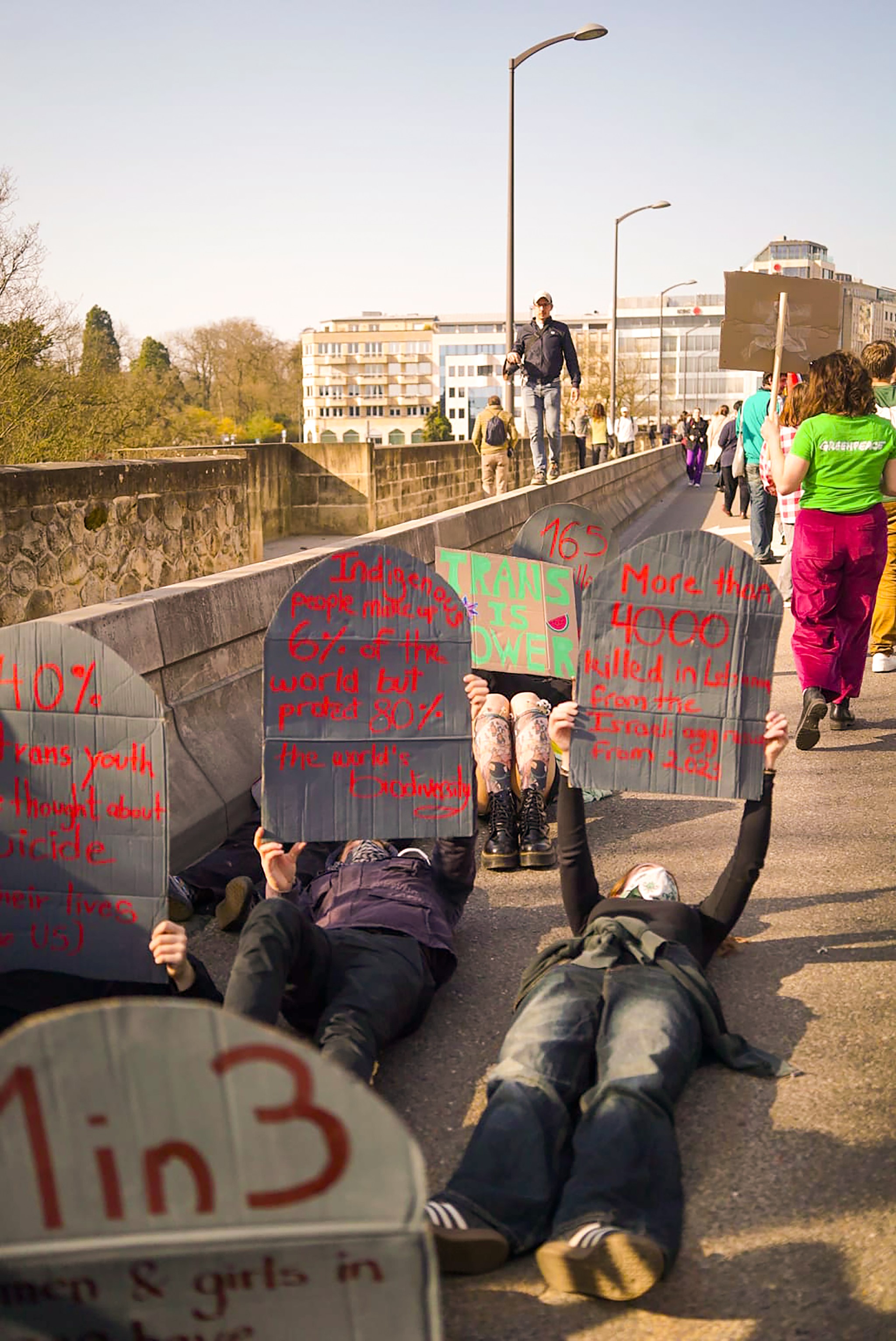
As trans people, Palestinians, victims of climate change, people of colour, Sudanese people, people from the Congo and many more die at the hands of the systems we must eradicate, Megaphone could not march quietly side by side politicians that uphold this cruelty. We are revolted by the use of women’s rights and queer rights in the media and parliament as a pretense to once again justify war, destruction and genocide in West Asia. As intersectional, decolonial queer-feminists we needed to strongly oppose this narrative that insidiously corrodes, maims and kills the feminist, queer and emancipatory movements in countries plagued by foreign intervention, political instability and oppressive regimes. The military apparatus of Israel and NATO has dragged us into a war designed to satisfy the financial interests of mega corporations and the egos of small men like Donald Trump and Benjamin Netanyahu. Not a war over democracy, human rights or peace. A war of aggression is the height of patriarchy, whether led by men, women, or any other gender.
Unsurprisingly, many attendees stopped to show their support for us, some even joined us. Like many of the recorded speeches we collected made clear, a strong feminist movement recognizes the responsibility it has towards those who are the most vulnerable. It should be easy to remember that feminism once was (and still is) disregarded by many labor, civil rights and human rights movements. Our action and criticisms are meant to open up a public conversation after years of internal friction. We hope to see JIF rise to the opportunity and build a strong intersectional queerfeminist movement instead of half-hearted acceptance.
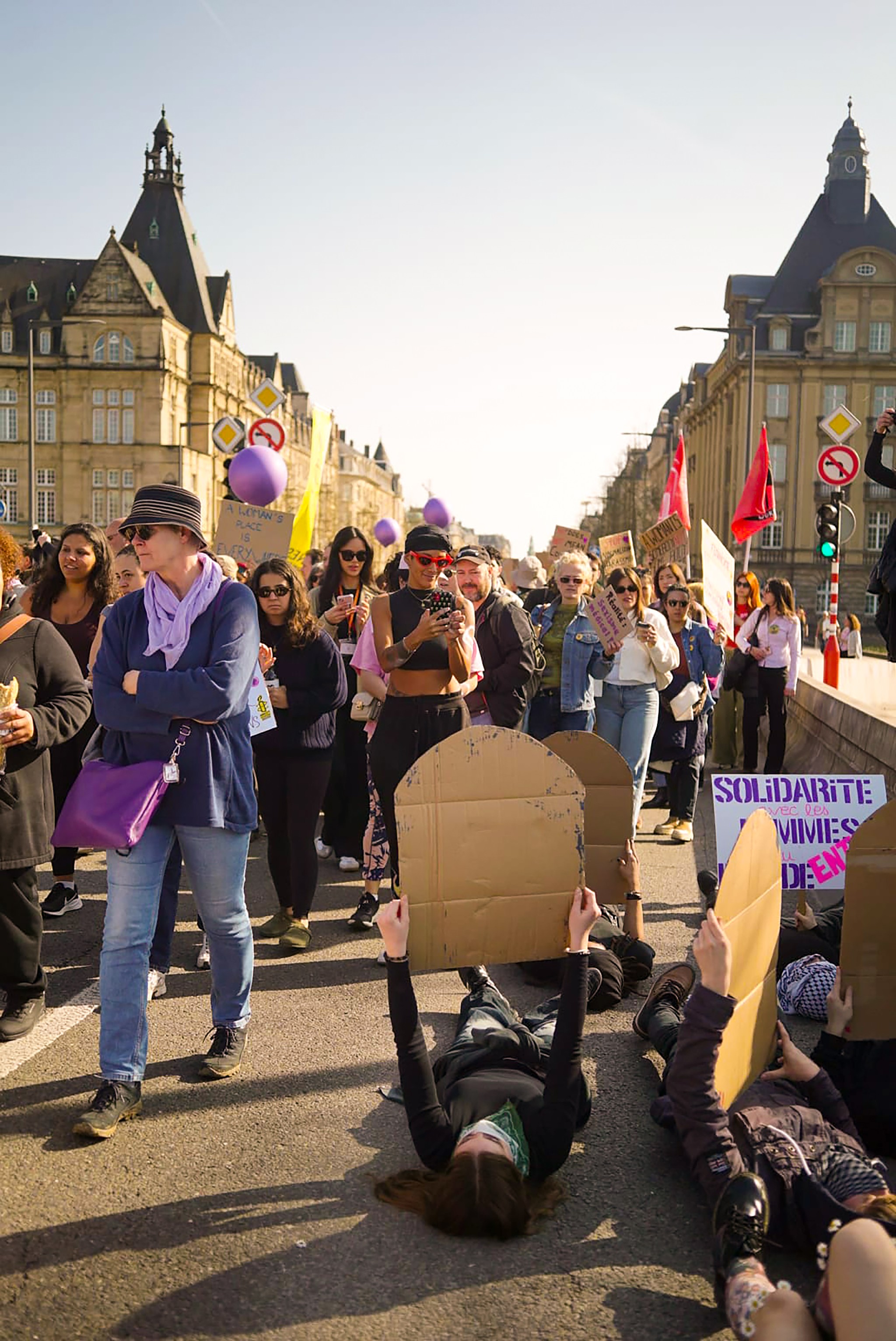
To fight the patriarchy we must stand in solidarity with all struggles and unite under one movement that shows that the only way forward is solidarity on an international scale. A movement that cannot be co-opted by opportunistic politicians, that insists on becoming palatable at the expense of its most vulnerable members and informed by on-the-ground experience of feminist movements abroad.